A Bibliometric and Visualization Analysis for Global Research Trends in Wushu and Mental Health (1981–2024)
* By Shu Chen Liu, Kenny S. L. Cheah, Syed Kamaruzaman Bin Syed Ali, Hui Min Qu, Zhen Lin Wang * Frontiers in Psychiatry, February 2026 *
Abstract
Background: Mental health has become one of the most urgent public health issues in the 21st century, and the COVID-19 pandemic has significantly increased this problem. As a traditional mind-body practice, Wushu (e.g., Tai Chi, Qigong) is increasingly recognized for its therapeutic potential in mental health. However, bibliometric studies in this eld remain scarce.
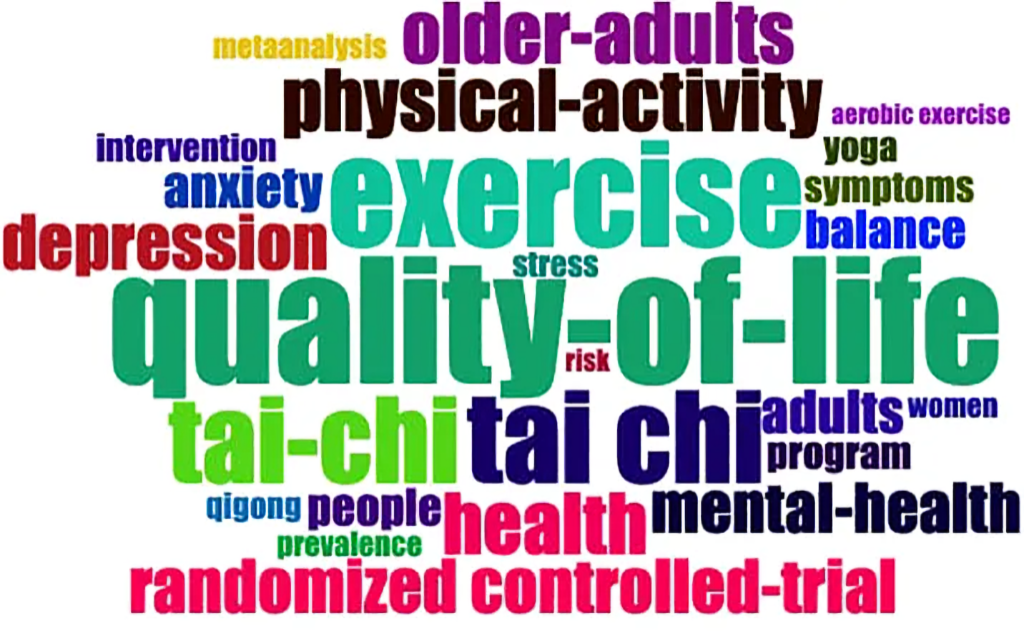
Methods: This study aims to visualize the Wushu and mental health (WMH) related research through bibliometric analysis of the Web of Science database (1981–2024). It examines publication trends, core journals, international collaboration, leading authors, and thematic evolution. A systematic search using Boolean operators identified 536 articles. To conduct a complementary analysis of the findings, this study compared the 23 clinical trials identified from PubMed (2020–2024) with the research trends obtained from the bibliometric analysis.
Results: The study found that the number of published articles and cited times increased significantly in the past five years, which confirmed the influence of COVID-19 in this field. China and the United States, represented by Harvard University, are the main pushing forces in this area. The research focus has shifted from rehabilitation orientation to comprehensive mental and public health perspectives. Future development trends may include strengthening international cooperation, standardizing intervention programs, and cross-cultural research.
Conclusion: This multi-database analysis provides researchers and policymakers with a scientific reference for the WMH field. It clearly reflects current research trends and future research directions in WMH.
About the author(s)

Shu Chen Liu
Department of Mathematics and Science Education, Faculty of Education, Universiti Malaya, Kuala Lumpur, Malaysia

Kenny S. L. Cheah
Department of Education Management, Planning and Policy, Faculty of Education, Universiti Malaya, Kuala Lumpur, Malaysia

Syed Kamaruzaman Bin Syed Ali
Department of Educational Foundations & Humanities, Faculty of Education, Universiti Malaya, Kuala Lumpur, Malaysia
Hui Min Qu
Centre for Sustainable Urban Planning and Real Estate (SUPRE), Faculty of Built Environment, Universiti Malaya, Kuala Lumpur, Malaysia
Zhen Lin Wang
Department of Education Management, Planning and Policy, Faculty of Education, Universiti Malaya, Kuala Lumpur, Malaysia