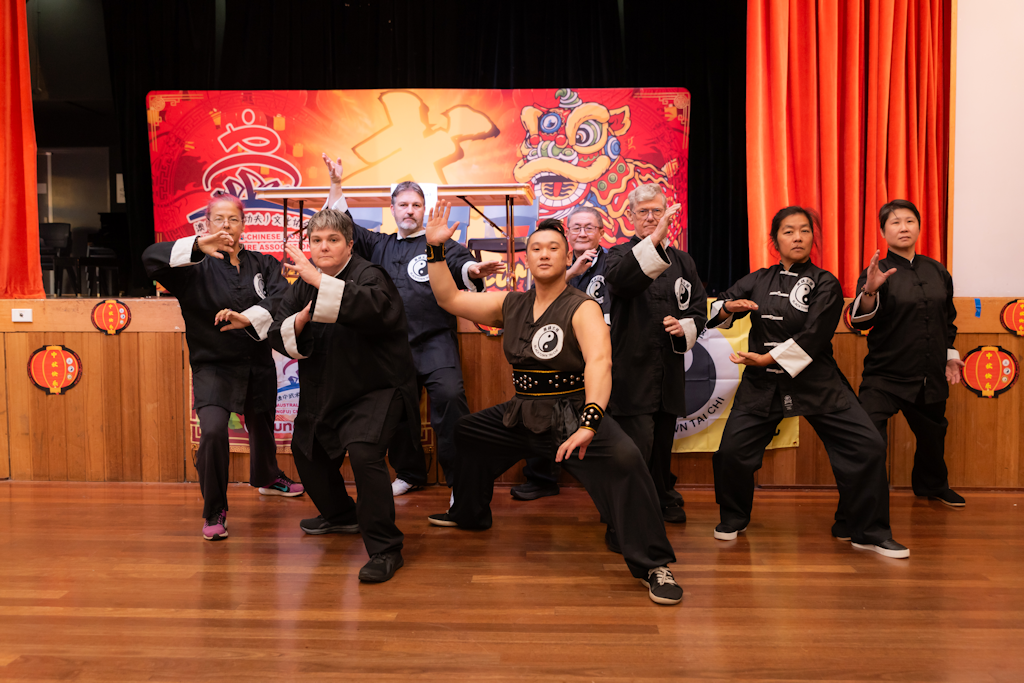
Australia Kung Fu Tai Chi Festival 2026
* 20 September 2026, Blacktown NSW *
by Master William Lo
Every move and stance embodies both power and heritage; the interplay of motion and stillness reflects not only kung fu but the philosophy of life itself. On September 20, the Australia Kung Fu Tai Chi Festival 2026 was held by Australian-Chinese Wushu (Kung Fu) Culture Association Inc (aka ACWCA) in Sydney. Martial arts enthusiasts, art troupes, and community members from diverse cultural backgrounds and age groups gathered to forge friendships and share sentiments through martial arts and the arts. Amidst the harmonious blend of hardness and softness, they collectively showcased the unique charm of Chinese martial arts—a force that transcends language and culture.
Prior to the main festival events, the 2026 ACWCA Second International Tai Chi and Wushu (Kung Fu) Invitational Competition—hosted by ACWCA—kicked off with great enthusiasm. The tournament brought together practitioners from various martial arts schools, offering a platform to exchange skills while sharing a profound passion for Chinese martial arts culture.
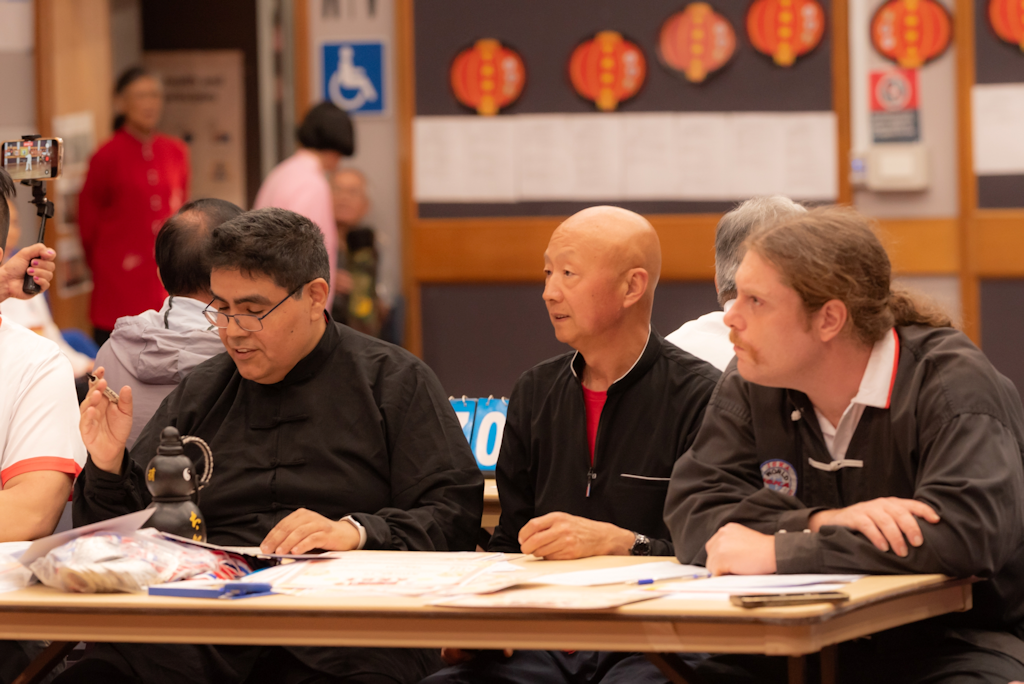
Pictured: Three competition judges—Master Pablo Baretto, Master Wang Yunkuo (President of ACWCA), and Damien Turner.
At the competition venue in Ashfield Town Hall, contestants of all ages and backgrounds gathered to participate in this significant, milestone event. On the competition floor, the athletes demonstrated not only superb martial arts skills and rigorous self-discipline but also the intergenerational transmission of ancient traditions and the positive martial arts culture of mutual respect and healthy living.
Pictured: Medallists at the 2026 ACWCA Second International Tai Chi and Wushu (Kung Fu) Invitational Competition
The festival opened with a lion dance performance. A bilingual poetry recitation titled “Between Mountains and Seas”—themed “Separated by mountains and seas, yet connected by culture; forging friendships through martial arts, and knowing one another through the heart”—paid tribute to the inheritors of martial arts and the spirit of multicultural exchange.
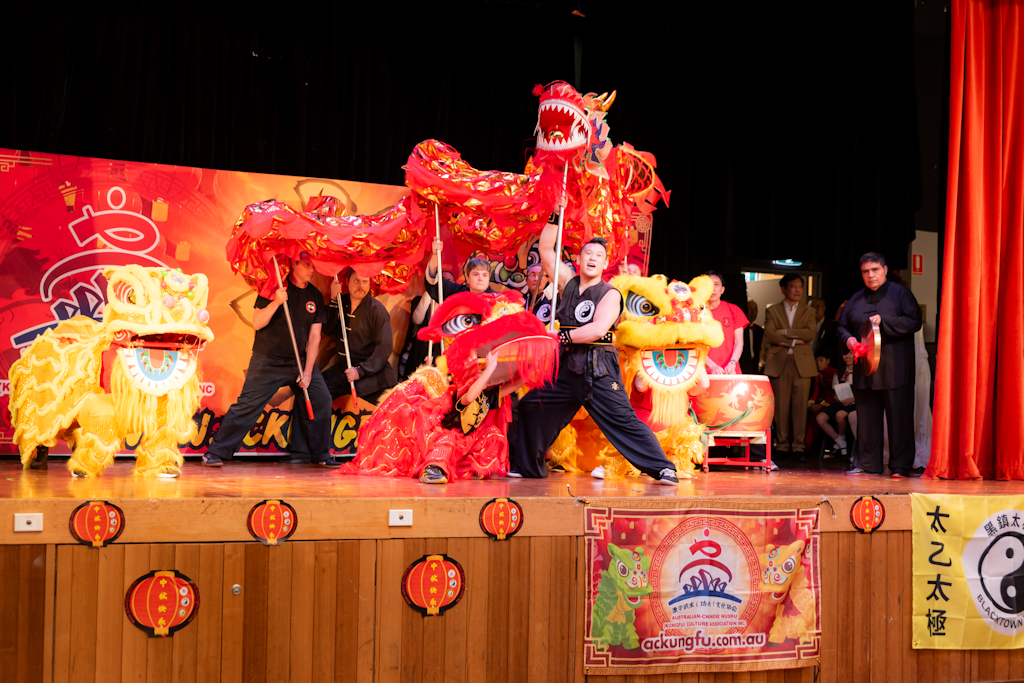
Pictured: Lion and Dragon Dance performance (by ACWCA, Blacktown Tai Chi, and Lion Dance Prodigy Matilda).
The event featured speeches from several distinguished guests, including Pablo Baretto, Secretary-General of ACWCA; Zhang Jinfan, Principal of the Sydney Elite Chinese School and Honorary President of the NSW Chinese Writers’ Association; Daoist Master Yan Meixi (President of the Australian Taoism Association, Dean of the Australian Taoism Cultural Academy, Abbot of Yuanbao Mountain Yaochi Palace, and NSW Justice of the Peace); Master Alex Mieza, a Wudang Kung Fu coach dedicated to teaching and promoting Wudang Tai Chi and traditional Wudang Kung Fu; and Jack Wu, Vice President of ACWCA. Speaking from perspectives ranging from martial arts heritage and cultural education to Daoist philosophy and community engagement, they shared insights on the significance of traditional Chinese culture taking root and flourishing in Australia, as well as its role in connecting diverse ethnic communities.
The day’s martial arts showcase was a dynamic tapestry of Chinese martial traditions. A wide array of styles, schools, and weaponry took the stage in succession—from Mantis “Ten-Step” Fist, Five-Sound Fist, and Baji Fist to Wudang, Chen-style, and Hong-style Tai Chi; and from Qingping Sword, Six-Harmony Spear, double sabers, and nunchucks to chain whips, Taiyi Iron Ring Qigong, and Tai Chi fans. The performances embodied the duality of martial arts: movements ranged from the thunderous power of hard styles to the silent fluidity of soft styles; from the sharp edge of blades to the harmonious, circular flow of Tai Chi. On this Sydney stage, traditional martial arts were not merely a “displayed” cultural heritage but a shared lifestyle and cultural language embraced by people of all ages and ethnic backgrounds.
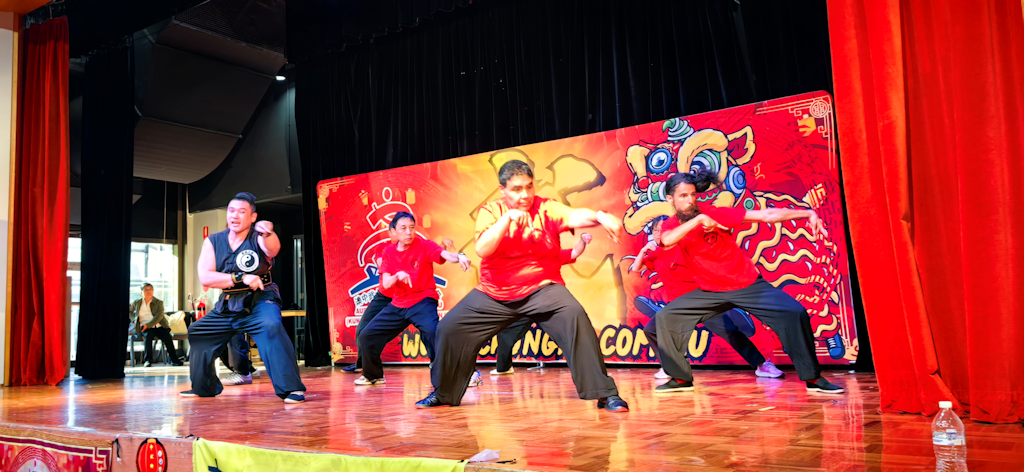
Pictured: ACWCA performing Mantis “Ten-Step” Fist.
This year’s festival featured a special “Creative Figures Showcase” segment—a series of mini-interviews designed to bridge the gap between martial arts and the people who practice them, allowing the audience to glimpse the spirit and philosophy behind the physical techniques.
Master Pablo Baretto, Secretary-General of the ACWCA, noted that the Association aims to pass on more than just Kung Fu techniques and forms; it seeks to transmit the spirit of respect, perseverance, and camaraderie through martial arts, ultimately using the discipline to connect people from diverse cultural backgrounds. As the saying goes: “Martial arts connect us across the world; the spirit unites us from all directions.”
Master William Lo of Blacktown Tai Chi shared insights drawn from his personal journey, noting that martial arts brought him not only health and happiness but also a sense of peace and confidence in facing life. “Training the body strengthens bones and sinews; cultivating the mind brings composure and ease.” Here, the power of martial arts extends beyond physical movements to the inner self. Blacktown Tai Chi, under the leadership of Master William Lo, competed primarily in the traditional Tai Yi Tai Chi and Group Health Qigong categories in the competition earlier in the day, winning a total of 29 gold medals over multiple events. This multicultural team credited their training at Blacktown Tai Chi for providing a deep experience and greater appreciation of Traditional Chinese Culture. Master Lo expressed his immense satisfaction in the turnout of the event and emphasised his desire of keeping Tai Chi traditions alive with such festivals as this one, as well as the corporate wellness classes and school incursions that his academy regularly holds.
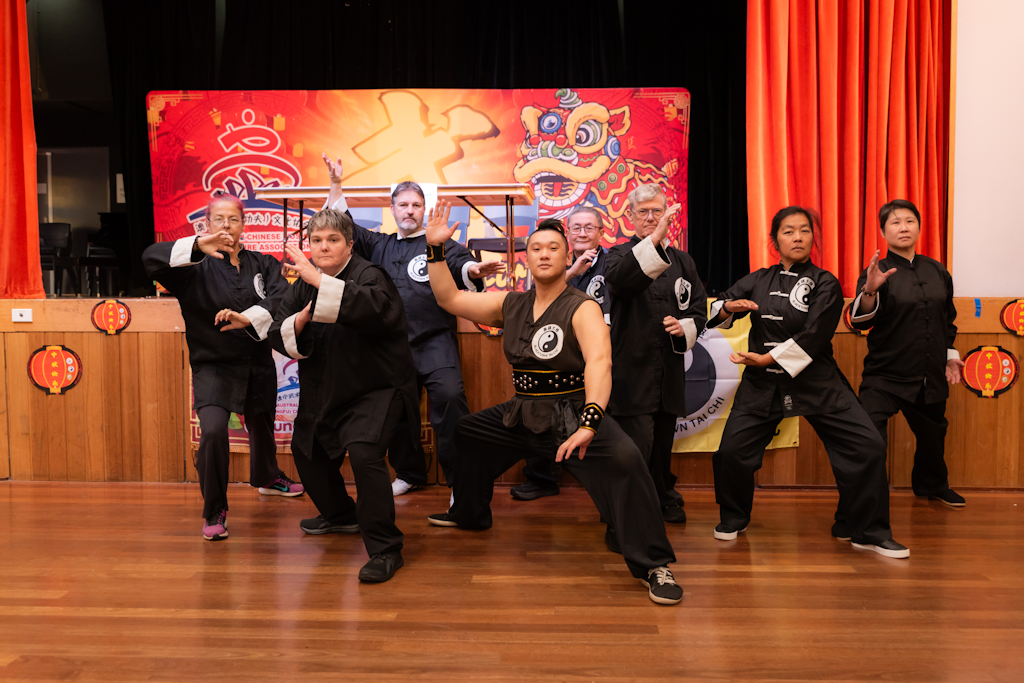
Pictured: Blacktown Tai Chi performing Tai Yi Tai Chi
Damien Turner, an expert in the nine-section whip, addressed the question of whether it is harder to unleash a strike or to retract it. He highlighted the philosophical depth of martial arts: unleashing requires power, while retracting requires control; true mastery lies in the ability to both release and restrain. “Strength is revealed in the release; true skill is shown in the retraction.”
Taoist Master Yan Meixi—President of the Australian Taoism Association, Dean of the Australian Taoism Cultural Academy, Abbot of Yuanbao Mountain Yaochi Palace, and NSW Justice of the Peace—elevated the discussion to the realm of the “Tao.” She explained that while martial arts training begins with techniques and physical conditioning, over time, practitioners learn to let go of the desire to compete and instead embrace peace, respect, and harmony with nature. Martial arts train the body, but ultimately cultivate the spirit; the Tao is found within the daily rhythm of practice and life itself.
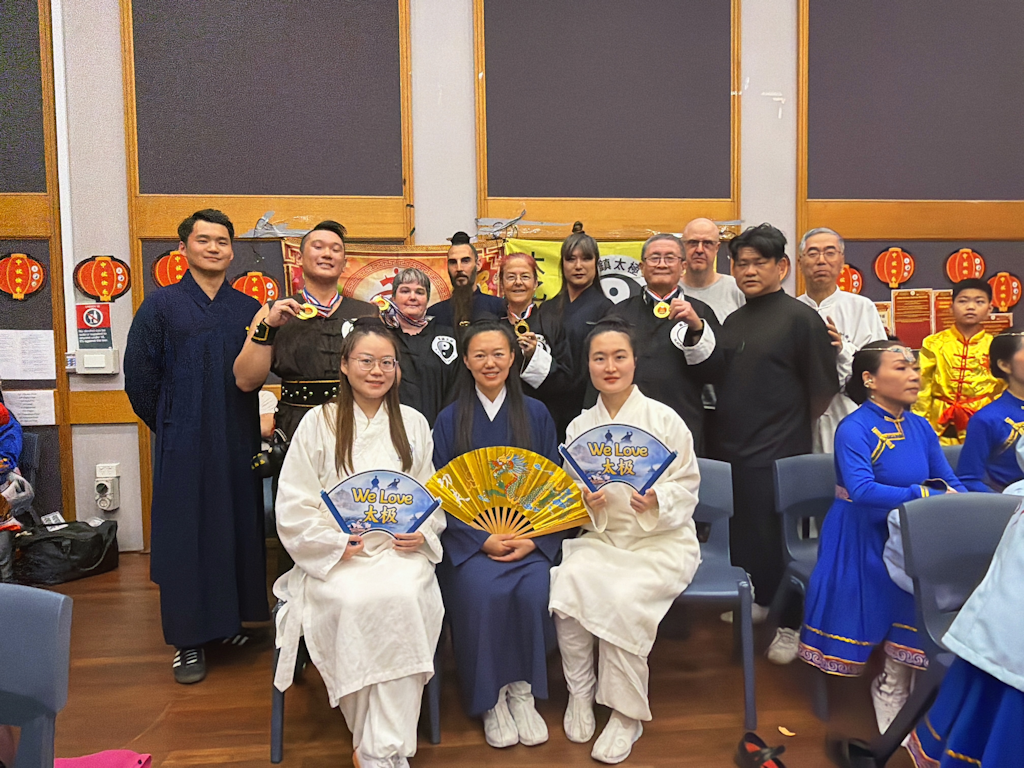
Pictured: Master Yan Meixi, Master Alex Mieza, Blacktown Tai Chi, and Master Kang.
Wudang Kung Fu instructor Master Alex Mieza spoke from the perspective of modern life, sharing the physical and mental benefits of Wudang Kung Fu. It offers more than just physical strength; it helps individuals find focus, balance, and inner tranquility amidst the busyness of daily life. “Vitality arises in movement; peace of mind is found in stillness.”
This brief series of on-stage interviews added a profound dimension to the event: the true height of martial arts lies not merely in winning with a single move, but in understanding respect; not just in unleashing power, but in knowing how to retract it; and not just in strengthening the body, but in finding inner peace.
In addition to martial arts, the “Showcase of Artistic Excellence” featured a diverse array of performances—including the model dance “Ink-Wash China”, the martial arts piece “Martial Rhythm of Mid-Autumn”, the song-and-dance “Spring’s Fragrant Herald”, the Peking Opera-style dance “Blossoms and Full Moon”, the Shanghai Opera excerpt “Chen Yi Gazes at the Huangpu River”, a bilingual recitation of ancient poetry titled “Sharing the Mid-Autumn Moon Across Distances”, the Northeast Chinese intangible cultural heritage “Shaman Dance”, the Peking Opera-inspired dance “Ode to the Plum Blossom”, and the “Guozhuang” dance “Golden Flowers”. These acts allowed martial arts, poetry, traditional opera, song and dance, and intangible cultural heritage to illuminate and complement one another on the same stage.
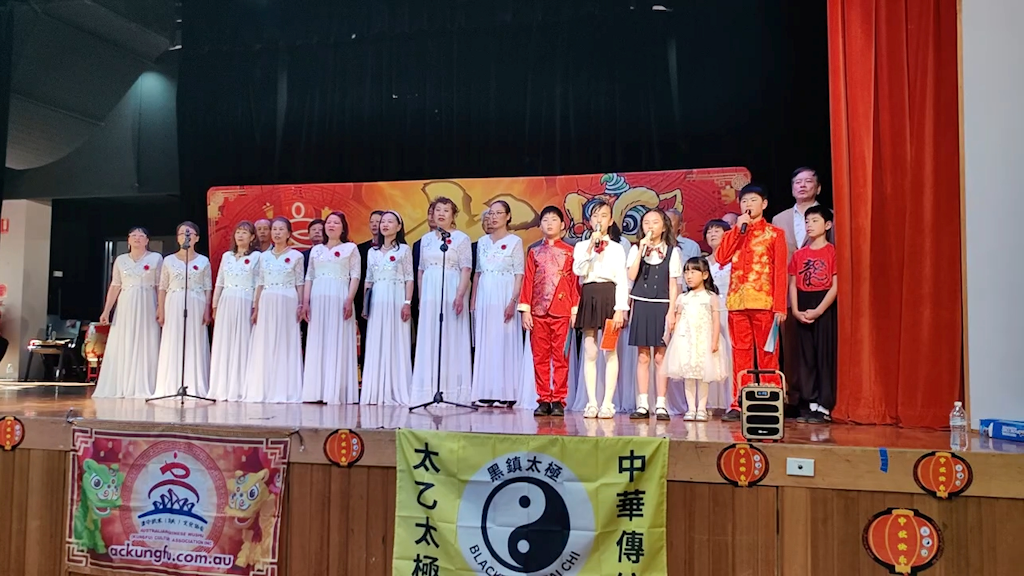
Pictured: Performers singing the national anthem.
From young martial arts students to seasoned practitioners, from traditional forms and weaponry to the contemporary stage, and from the roots of Chinese culture to the soil of Australia’s multicultural society—this festival offered far more than a mere martial arts demonstration.
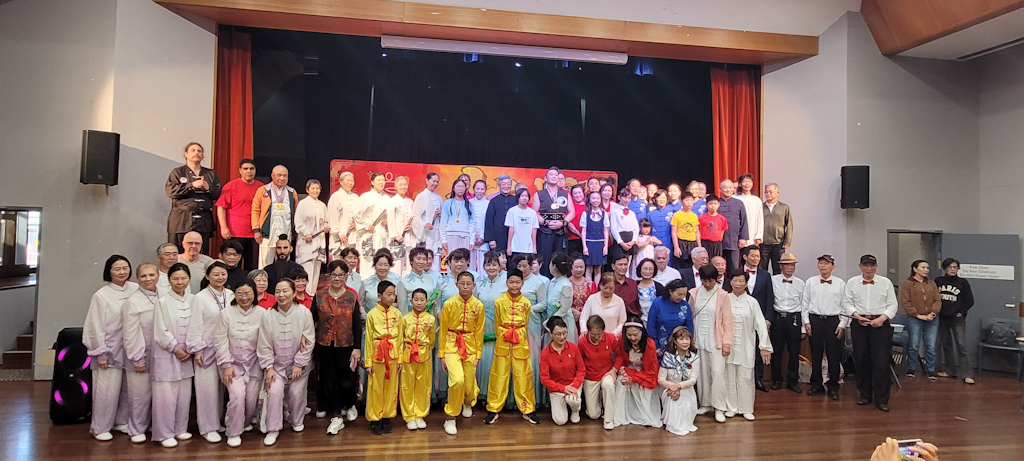
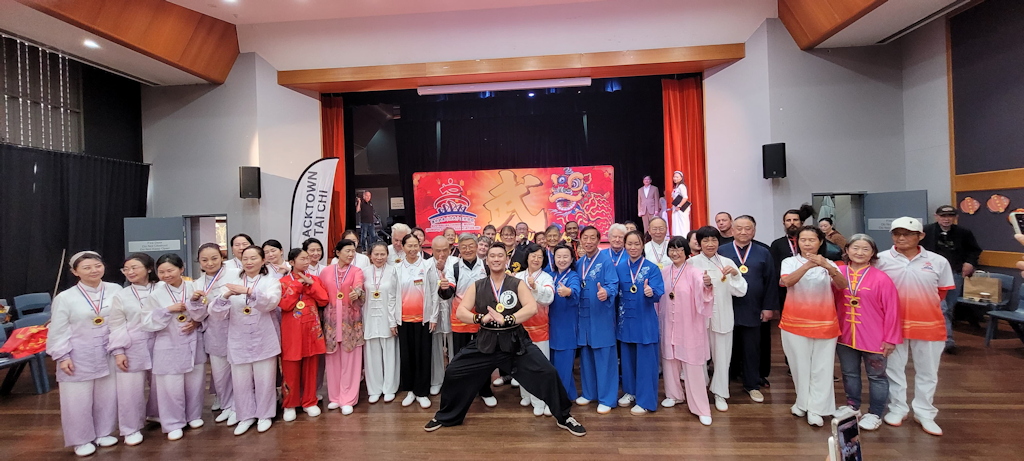
Pictured: The Australia Kung Fu Tai Chi Festival 2026 was an overwhelming success.
Culture that truly transcends vast distances is never merely a tradition kept on display; rather, it is something that people actively learn, pass down, and cherish—and are willing to share with others from diverse cultural backgrounds.
Meeting through martial arts, connecting heart to heart;
Though mountains and seas may lie between us, culture knows no boundaries.
Organiser: Australian-Chinese Wushu (Kungfu) Culture Association Inc
Co-organisers: Blacktown Tai Chi, Australian Chinese Community & Cultural Co-Creation Association Incorporated, Leading Light Multicultural Association Inc, Australian Xiao Hong Mao Association Art Troupe